
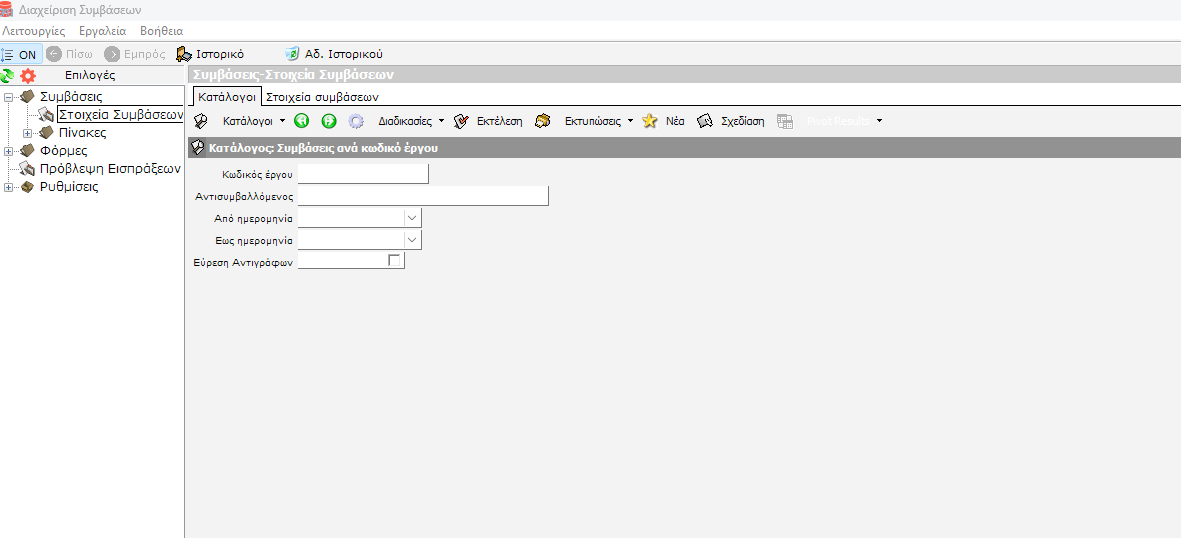
Once Upon a Time...
Designed to replace its predecessor, DPX-II, that was build upon Delphi 7 and Oracle Database, DPX-III uses state-of-the-art web tech in JavaScript, Node.js with Express.js and MongoDB.
Our team migrated the database from the old implementation and improved upon the features that were time-tested for over 15 years.
The resulting web-application is tailor-fitted to the customer's needs. Combining the experience and troubleshooting from the extended period of time before the upgrade, numerous aspects were trimmed and improved, both from the UI and the back-end.
Corporate-Oriented Structure
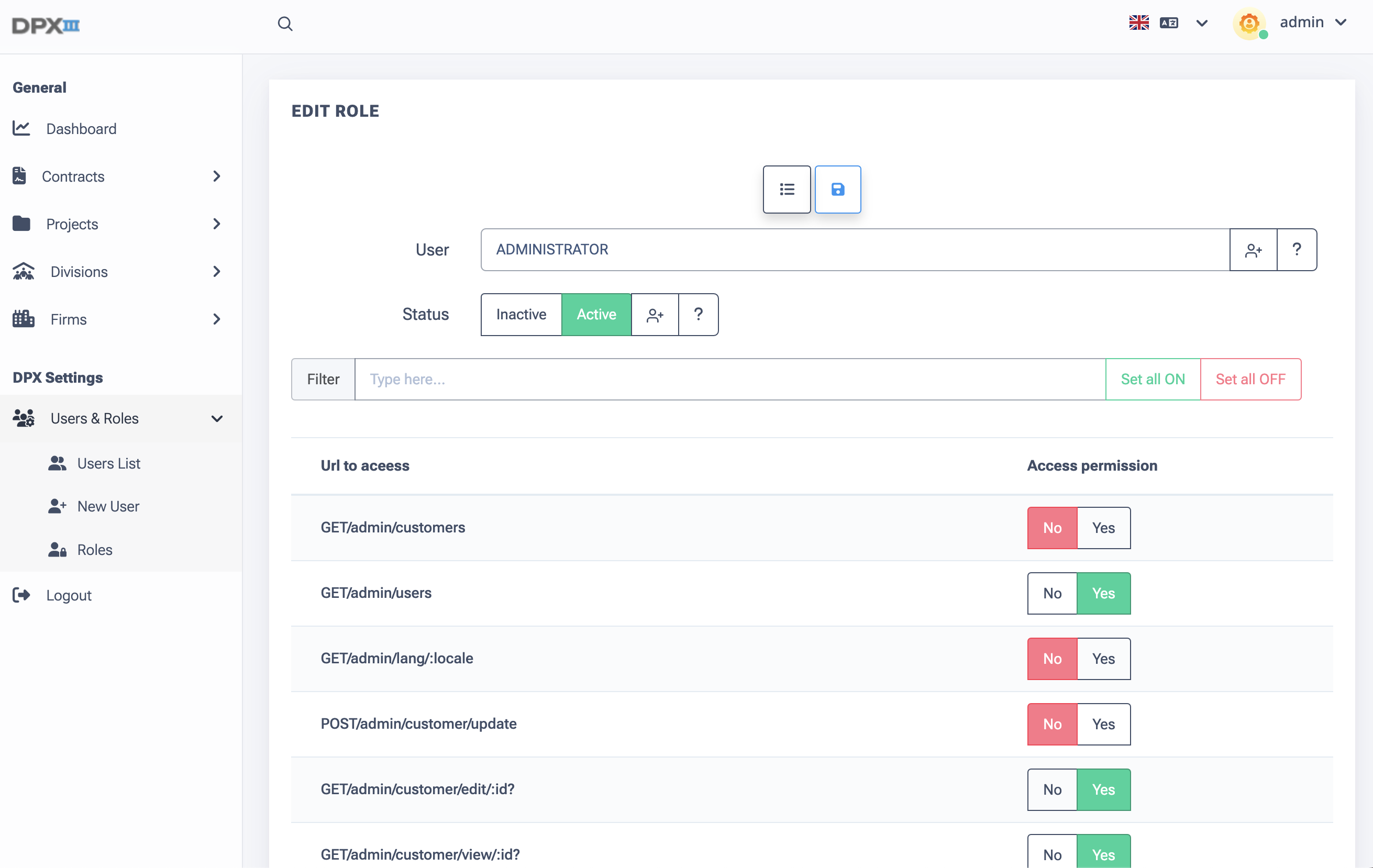
Being the most central part of the contract administration system software-wise, the web app needed to not only be user-friendly and productivity-oriented, it needed to mirror the corporate hierarchy too.
DPX-III is based upon a robust user permission and role system.
User accounts can be part of user groups, named "divisions" in DPX-III, that can also carry restrict or grant permission rights.
Reporting and Monitoring
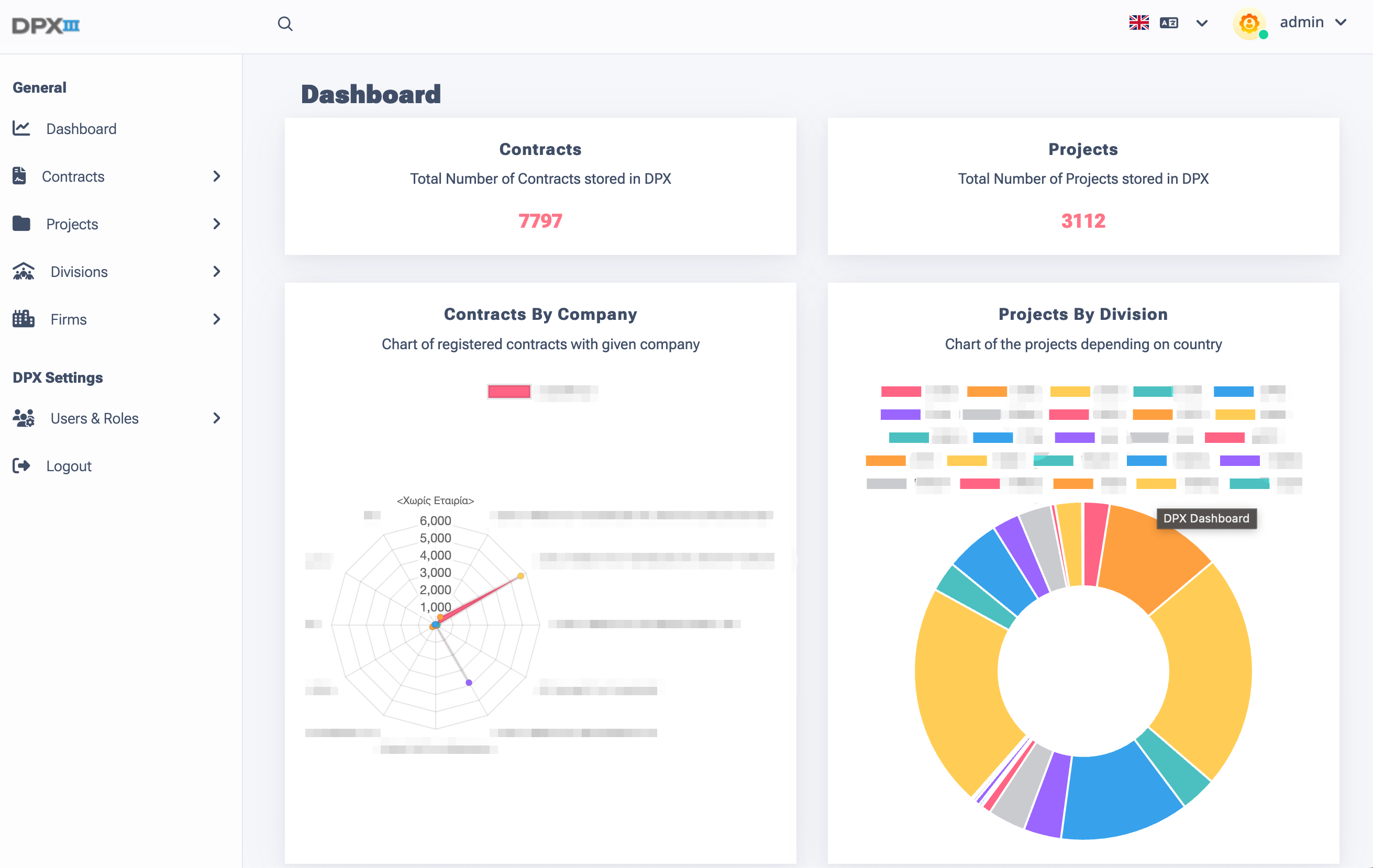
Implementing these complex relationships different entities like projects and contracts have with each other, as well as the general logistical ecosystem meant developing a lot of administration and monitoring tools into the web-app.
Export results and documents in PDF, XML and Excel Spreadsheets.
All documents exported from the app are held to the Tax Services and other governmental organization standards, in order to be eligible to be applied as official documents.
Fully Customizable Control Panels
Continuing with the focus on usability, we were able to make all of these features extensible and scalable.
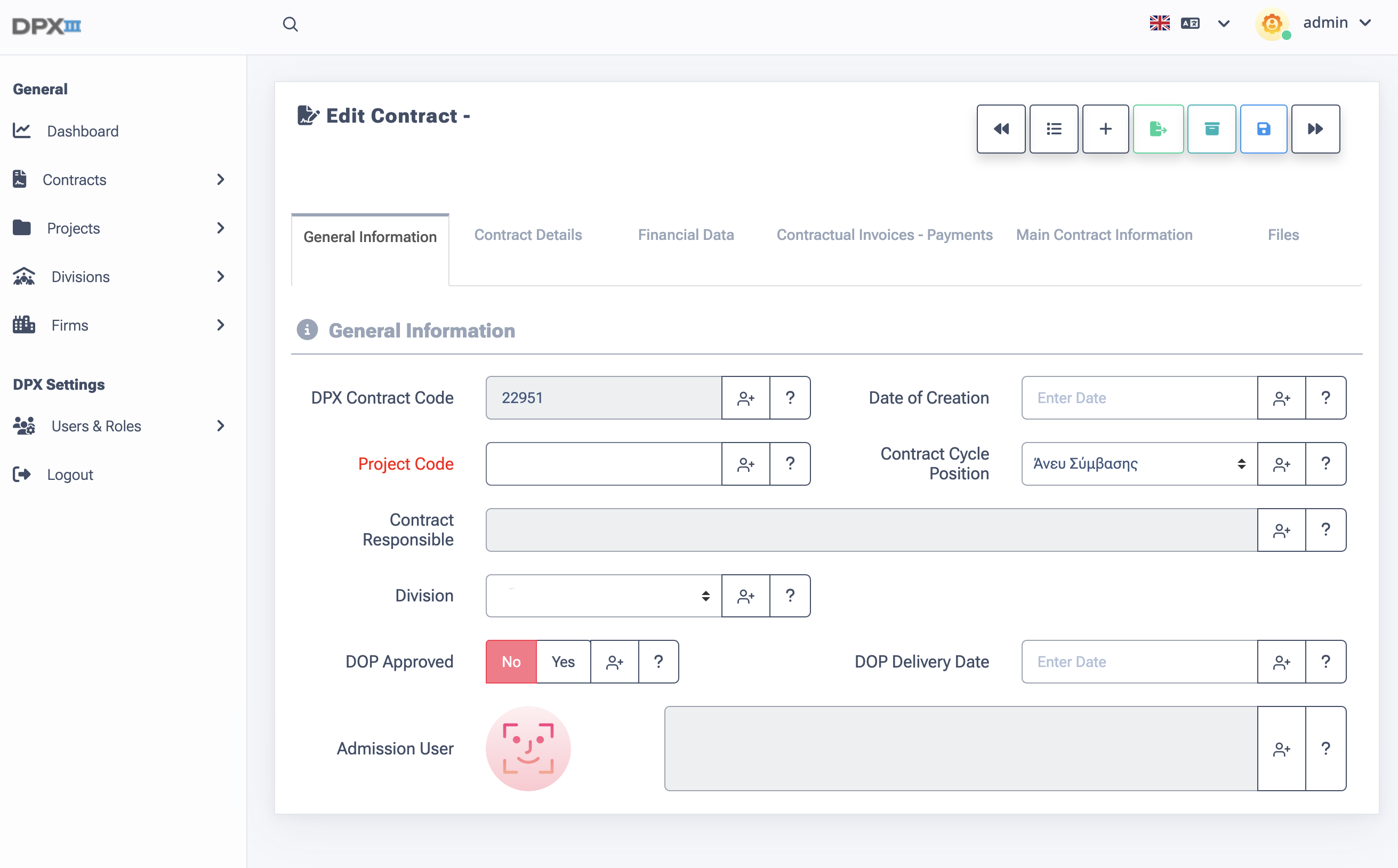
Every single entity on site, like a Division, a User Account, a Role, a Project, a Contract is able to have its attributes customized on-the-fly by its own, dedicated, control panel.
This effectively means that user with administrative roles can, for example, edit a user group's permissions, create a new group and add users in it, remove users from a group, or change their role, all without any code intervention and all through GUI.
In a nutshell...
DPX-III is a web-app that features, among others:
- User Session.
- User Roles and user readonly/hidden inputs based on roles.
- Management of User Accounts and User Rights by Delegated Roles integrated in web app.
- Statistics and Graphs of Project and Contract info.
- Internationalization (i18n) system in place for easy integration with any language, every text displayed on UI is translatable.
- Editable Help Texts by users (certain user roles like admin).
- File Upload and Preview.
- Easily interchangeable, editable and interconnected components in handlebars.js for a plethora of inputs (dates, booleans, texts, textareas, dropdowns etc.)
- XML Export.
- PDF Export.
- Full Text Search.
- Date Filter Search.
- Duplication and deletion of entities.
- Editing of entities.
- Schema Validation on Save.
- Temporary Save of entities (Save without validating schemas with a temporary saved flag)
- Multiple Kinds of entities with common and connected attributes.
- Responsiveness in all screen sizes.
- Smooth and fast UI/UX with the use of partial rending through jQuery.